Labels

Showing posts with label Literature. Show all posts

I read every one of "BBC's All Time Top 100 Best Novels"...

... well, I gave each book a try, anyway. Of the 100 books on the list, I read ninety cover-to-cover and the remaining ten anywhere from 20% to 90% through. If I read 50% in and regretted the time spent, I finished up with some CliffsNotes. There are too many great works of literature to force myself to read something I don't enjoy. The books completed to 90% were ones read for school but unfinished like The Complete Works of Shakespeare.

Full disclosure: Soon before finishing the list, I learned it wasn't really created by the BBC. It was an improved version of their "Big Read" list authored by an anonymous source, online.

After comparing the two lists, the meme version seems better, adding great books like Shadow of the Wind, The Wasp Factory, Handmaid's Tale, and Atonement. It also had a few undeserving titles like

Excerpt: Brideshead Revisited


Excerpts from Bridehead Revisited by Evelyn Waugh:

“Sometimes, I feel the past and the future pressing so hard on either side that there's no room for the present at all.”

“The trouble with modern education is you never know how ignorant people are. With anyone over fifty you can be fairly confident what's been taught and what's been left out. But these young people have such an intelligent, knowledgeable surface, and then the crust suddenly breaks and you look down into depths of confusion you didn't know existed.” 

“We keep company in this world with a hoard of abstractions and reflections and counterfeits of ourselves - the sensual man, the economic man, the man of reason, the beast, the machine and the sleepwalker, and heaven knows what besides, all in our own image, indistinguishable from ourselves to the outside eye. We get borne along, out of sight in the press, unresisting, till we get the chance to drop behind unnoticed, or to dodge down a side street, pause, breathe freely and take our bearings, or to push ahead, outdistance our shadows, lead them a dance, so that when at length they catch up with us, they look at one another askance, knowing we have a secret we shall never share.”

2014 Reading List

Looking back on 2014, I read a couple great books (Germinal, Waiting for the Barbarians, Do Androids Dream...), but many more were tiresome (Possession, Emma, The Bell Jar, Notes from a Small Island).

The realization has led me to change my perspective towards reading. A change that mirrors my new approach to travel: check the boxes and finish the lists, then be more spontaneous and discerning in the experiences I sign up for.

I'm glad I've paid my dues by visiting the Eiffel Tower, the Egyptian Pyramids, the Coliseum, and the Parthenon. But, like books, my most memorable travel experiences have little to do with these well-known destinations. These places are over-photographed and analyzed to the point of abstraction while a more vibrant reality surrounds. I'm glad I've read as many classics as I have, but it's time to move on.

Like the chauffeur realizes in Ishiguro's Remains of the Day, sometimes a dedication to structure and
lists keeps us from something better. On to the list...

Excerpt: Waiting for the Barbarians

Excerpts from Waiting for the Barbarians by J.M. Coetzee:
 
“Empire has located its existence not in the smooth recurrent spinning time of the cycle of the seasons but in the jagged time of rise and fall, of beginning and end, of catastrophe.”

“One thought alone preoccupies the submerged mind of Empire: how not to end, how not to die, how to prolong its era. By day it pursues its enemies. It is cunning and ruthless, it sends its bloodhounds everywhere. By night it feeds on images of disaster: the sack of cities, the rape of populations, pyramids of bones, acres of desolation.”

“The Empire does not require that its servants love each other, merely that they perform their duty.”

“To the last we have learned nothing. In all of us, deep down, there seems to be something granite and unteachable. No one truly believes, despite the hysteria in the streets that the world of tranquil certainties we were born into is about to be extinguished.” 

“The jackal rips out the hare's bowels, but the world rolls on.”

“I truly believe I am not afraid of death. What I shrink from, I believe, is the shame of dying as stupid and befuddled as I am.”

Excerpts: Shadow of the Wind by Carlos Ruiz Zafón

When I found this book in my apartment building's library, I hardly noticed that the edition's design was made to look like an old book because the copy was so beaten up itself. Ironically, it's a book about a boy who finds a book in a library of old forgotten books. After taking it back to our apartment I found out it's on my list of books to read. Unfortunately, the adventures created for the boy upon finding the book have yet to reach me.

Favorite lines from the book:

"Someone once said that the moment you stop to think about whether you love someone, you've already stopped loving that person forever."

“Evil presupposes a moral decison, intention, and some forethought. A moron or a lout, however, doesn't stop to think or reason. He acts on instinct, like a stable animal, convinced that he's doing good, that he's always right, and sanctimoniously proud to go around f***g up anyone he perceives to be different from himself. What the world needs is more thoroughly evil people and fewer borderline pigheads”

Excerpts: 30 Lessons for Living from the Wisest Americans

I first mentioned the Legacy Project in regard to some life changes that were happening at the time. Now that I've finished the book based on this project, here is more advice from the seniors in the book:

1. Stop using "I don't care how long I live" as an excuse for bad health habits: Behaviors like smoking, poor eating habits and inactivity are less likely to kill you than to sentence you to years or decades of chronic disease.

It's about quality of life, not length. This argument can be used in the opposite direction, but are unhealthy habits really worth decades of unhealth misery? Modern medicine can keep you alive, but it can't keep you young, functioning, and free of costly medicines and treatments.

2. Parents are often only as happy as their unhappiest child: This might be common knowledge held by parents and certainly has exceptions, but I'd never thought about it.

3. Don't hit your kids: The book claims that many elders regret physical punishment. I was sold on this point after reading the book, then I saw a very young child on a local trail trying to run into a busy road despite his father's verbal warnings. It made me reconsider. A spanking could save that child's life. After all, natural selection sounds good until it comes to your own child. Still considering my position.

Here are three repeat points from my first post on the book:

3.  Say “Yes” to Opportunities: When offered a new opportunity or challenge, you are much less likely to regret saying yes and more likely to regret turning it down. They suggest you take a risk and a leap of faith when opportunity knocks.

5. Travel More: Travel while you can, sacrificing other things if necessary to do so. Most people look back on their travel adventures (big and small) as highlights of their lives and regret not having traveled more. As one elder told me, “If you have to make a decision whether you want to remodel your kitchen or take a trip—well, I say, choose the trip!”

7. Time is of the essence: Live as though life is short—because it is. The point is not to be depressed by this knowledge but to act on it, making sure to do important things now. The older the respondent, the more likely they were to say that life goes by astonishingly quickly. Said one elder: “I wish I’d learned that in my thirties instead of in my sixties!”

Spring of Oz

I've been dragging around Wicked, the book, to read on our travels. Coincidentally, the musical will be featured in this year's Dallas Summer Musical 2013 series, and The Great Oz just hit theaters. After finishing the book and catching The Great Oz at a nearby drive-in, we decided to round out the experience by watching the movie classic, Wizard of Oz.


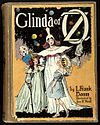
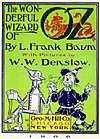
It's interesting to know that The Wonderful Wizard of Oz is only one book in a series of Oz Books written by Frank Baum. Not so unlike other series collections like Harry Potter, Narnia, or LoTR, Baum's books build up a fictitious world, Oz. Each of Baum's books focus on different characters in the initial book with titles like Glinda of Oz, The Tin Woodsman of Oz, The Scarecrow of Oz, and more.


To me, Oz doesn't have the same appeal as Middle-Earth or even Narnia, but Gregory Maguire's version creates something that none of the other fictional worlds do, a second telling of how things really were. As anyone that has read the book or seen the musical knows, it turns the initial story on its head and adds depth to a fiction that was somewhat flat. The new Disney version, though not as brave in its retelling as Wicked, picks up on this as well.

Notice that the "Tik-Tok" robot used in Wicked, has its own Oz book below.

Glinda cover.jpg TheTinWoodmanOfOz.jpg Scarecrow of oz cover.jpg Tik tok cover.jpg Wizard title page.jpg

Literature: Maurice Sendak info and links

My skateboard in high-school had a Where the Wild Things Are forest scene on its deck. It was fun and cool. I was only recently made aware of the broader scope of Sendak's work and personality after attending a Colbert/Sendak exhibit at the Rosenbach Museum and Library in Philadelphia. From readings by President Obama to humorous interviews by Stephen Colbert, here are some links in tribute to Sendak:

"Mr. Sendak’s characters, by contrast, are headstrong, bossy, even obnoxious. (In “Pierre,” “I don’t care!” is the response of the small eponymous hero to absolutely everything.) His pictures are often unsettling. His plots are fraught with rupture: children are kidnapped, parents

Excerpt: Captain Corelli's Mandolin

Corelli's Mandolin is the latest book I've read as I work through BBC's top 100 list. It's one of my favorites so far. Bernieres characters are those that could have been. They bring humanity to the cold historical facts and military atrocities of WWII. Far from glorifying war, it beautifies human frailty, love, and relationships mong the people living in Greece during Italian and German occupation.

"Love itself is what is left over when being in love has burned away, and this is both an art and a fortunate accident."

"Italians always act without thinking, it's the glory and the downfall of your civilisation. A German plans a month in advance what his bowel movements will be at Easter, and the British plan everything in retrospect, so it always looks as though everything occurred as they intended. The French plan everything whilst appearing to be having a party, and the Spanish..., well, God knows."

"Just bring in the wood before she asks for it, and bring her a flower every time you come back from the field. If

Opinion: Ayn Rand and the crash of Flight 3407

Something I wrote a while back and never got around to posting, but still relevant.

Ayn Rand and the crash of Flight 3407
By Tyler Barnett


My little sister is a flight attendant for Colgan Air, the regional airline responsible for the plane crash in Buffalo last year that killed every passenger aboard. She recently sent me this Frontling PBS video. I don’t know her reason for sharing, whether the report made her worry or she just knew I’d be interested, but it came at a good time. I’d just finished Atlas Shrugged by Ayn Rand.

Rand has been belittled with labels like hack and armchair philosopher, but with all the crashes lately (economies, planes, Toyotas) it’s worth looking at a book that describes a similar scenario.

Atlas Shrugged depicts an America in which the working mind has gone on strike. With no incentive to work due to government looting, industrialists abandon their factories and mills. Under a system that rewards need instead of production, the capable pretend to be incapable instead of being exploited. The world crashes; first in small and patchable ways, then in supply-chain failures and food and fuel shortages.

Here are notable similarities between the decaying socioeconomic mindsets described fictitiously in Atlas Shrugged and those of the real-world made obvious in the Flight 3407 video:

Liability more important than safety

In the book, executives and managers are more afraid of being held liable than of being responsible for catastrophe or injury. To keep costs low and meet deadline, they take risks that jeopardize safety while covering themselves from legal fault.

The video explains that regional airlines like Colgan are used by larger airlines (Continental = Colgan) to decrease flight cost, thus remaining competitive. This lower cost is made possible by hiring less experienced pilots, working pilots more hours

Excerpts: Dune


Excerpts from Dune by Frank Herbert:

"Once men turned their thinking over to machines in the hope that this would set them free. But that only permitted other men with machines to enslave them.
The mystery of life isn't a problem to solve, but a reality to experience.
Muad'Dib learned rapidly because his first training was in how to learn. And the first lesson of all was the basic trust that he could learn. It's shocking to find how many people do not believe they can learn, and how many more believe learning to be difficult. Muad'Dib knew that every experience carries its lesson.
A process cannot be understood by stopping it. Understanding must move with the flow of the process, must join it and flow with it."

"Any road followed precisely to its end leads precisely nowhere. Climb the mountain just a little bit to test that it's a mountain. From the top of the mountain, you cannot see the mountain"

"There is no escape — we pay for the violence of our ancestors."

"To save one from a mistake is a gift of paradise."

2012 Reading List

Since 2007, I've been tracking the books I read. I note the author, number of pages, type of book, and how much I liked the book on a scale of 1-4 in a spreadsheet. Since the beginning of 2007, I've read 54,864 recorded pages. I'm not bragging since many of these were graphic novels and plenty of people read more than I do -- just an interesting number.

I like Scott Stein's idea of saving the book's cover for a more visual record.

Here is my 2012 in books:

1. Hitchhiker's Guide to the Galaxy Adams, Douglas
2. Time Traveler's Wife Niffenegger, Audrey
3. Ender's Game Card, Orson Scott
4. Ender's Shadow Bk 1 Card, Orson Scott
5. Watership Down Adams, Richard
6. V is for Vendetta (reread) Moore, Alan
7. Superman/Batman Absolute Power Loeb, Jeff
8. Superman/Batman Public Enemies Loeb, Jeff
9. Superman/Batman Supergirl Loeb, Jeff
10. Kickass Millar, Mark
11. Nemesis Millar, Mark
12. A Little Book on the Human Shadow Bly, Robert
13. Wind in the Willows Graham, Kenneth
14. Cloud Atlas Mitchell, David
15. Sandman (entire series) Gaiman, Neil
16. A Prayer for Owen Meany Irving, John
17. Proficient Motorcycling Hough, John

Literature: Ian McEwan and George Orwell

1. Orwell

"A man may take to drink because he feels himself to be a failure, and then fail all the more completely because he drinks. It is rather the same thing that is happening to the English language. It becomes ugly and inaccurate because our thoughts are foolish, but the slovenliness of our language makes it easier for us to have foolish thoughts. The point is that the process is reversible. Modern English, especially written English, is full of bad habits which spread by imitation and which can be avoided if one is willing to take the necessary trouble." 

Politics and the English Language (1946)


2. McEwan

"I sit in front of the computer, but I often have a pen in my hand. Word processing seems to me a blessing, a vast improvement on the mechanical clattering of typewriters. Close, indeed, to mental processes, in the sense that passages, pages, chapters, whole novels are held in a memory. I like the special, privileged nature of prose that’s not yet been printed out, held in some special space that resembles a private thought, or a secret.

So what’s the pen for?
Sometimes thoughts come in a rush, and I need to jot down five or six key words. It’s easy to lose the idea of a whole passage if you don’t get the markers down quickly..." 

Ian McEwan on Books That Have Helped Shape His Novels


40 Modern Nonfiction Books Everyone Should Read

40 Modern Nonfiction Books Everyone Should Read from the blog Marc and Angel Hack Life.

I've read twelve books from this list, most as a child. My father would pay me somewhere between one and five cents per page to read books from a list he created. At eleven, I didn't enjoy these books in the same way I enjoyed reading The Hardy Boys: Treasure on the Tracks, but it definitely helped mature my perspectives.

One book I would add to this list is The Millionaire Next Door, a book about the humble life of the average American millionaire and how it contrasts with the millionaire image.  

"Focusing on those with a net worth of at least $1 million, their surprising results reveal fundamental qualities of this group that are diametrically opposed to today's earn-and-consume culture, including living below their means, allocating funds efficiently in ways that build wealth, ignoring conspicuous consumption, being proficient in targeting marketing opportunities, and choosing the "right" occupation."


BBC's All Time Top 100 Best Novels -- Update


I'm a sucker for lists of all types. Ever since being shown BBC's Top 100 Best Novel list a few years ago, I've been working my way slowly through it. I'm not making myself read anything I don't enjoy, but I'll at least give it a try. When I finish I'll go through, delete, and add to create a list of my own.

Instructions: Copy this into your NOTES. Bold those books you've read in their entirety, italicize the ones you started but didn't finish or read an excerpt.

1. Pride and Prejudice – Jane Austen JSB, MJB
2 The Lord of the Rings – JRR Tolkien JSB
3 Jane Eyre – Charlotte Bronte/b> JSB, MJB
4 Harry Potter series – JK Rowling (all)
5 To Kill a Mockingbird – Harper Lee JSB, MJB
6 The Bible JSB (MJB)
7 Wuthering Heights – Emily Bronte MJB
8 Nineteen Eighty Four – George Orwell JSB, MJB
9 His Dark Materials – Philip Pullman JSB
10 Great Expectations – Charles Dickens JSB, MJB
11 Little Women – Louisa M Alcott JSB

Literature: "Men in Books" and the limitation of fictional representation


1. Excerpt from Men in Books (Salon): "What do we desire from our American literary male protagonists these days? ... it’s more what the protagonists — and their authors — want from us that stands out. They are looking for approval, especially from women, [Eleanor] Blair thinks. She identifies a youngish generation of writers, including Sam Lipsyte and Gary Shteyngart, who tend to proffer schlumpy guy characters rejected by women, failing in their monotonous jobs and obsessively insecure in their masculinity...." [Read full article here]

2. Similar to the topic above is the limitation of fictional representation. I've been thinking about it lately so I'll post the rough thoughts here.

What do writers and movie directors really know about the intelligence of the average scientist or professor? The best authors are the best empathizers, but this doesn't change the fact that every word spoken on screen or in a book by a doctor is originating in a writer's mind. What do the audience members who are not part of these groups then know of these groups besides what they see written and directed? How many representations of people in movies and books pander to our flawed conception of the character to make it believable to us? How much does the portrayal of fictitious characters define roles and impact how real world people act?

If suddenly all portrayals of truck drivers in books, media, and news interviews portray them as book worm intellectuals, would real-world truck drivers change? If Harley Davidson decided to drastically change the image of the "Harley Man" could they get the masses of bikers to follow?

Excerpt: The Count of Monte Cristo


From The Count of Monte Cristo - Alexandre Dumas

“I possessed nearly 5000 volumes in my library at Rome, but after reading them over many times, I found that with 150 well-chosen books a man possesses a complete analysis of all human knowledge, or at least all that is either useful or desirable to be acquainted with.  I devoted three years of my life to reading and studying these 150 volumes..."

"Learning does not make one learned: there are those who have knowledge and those who have understanding. The first requires memory, the second philosophy...Philosophy cannot be taught. Philosophy is the union of all acquired knowledge and the genius that applies it"

Excerpts: Marilyn Monroe and the newspaper/cheesburger connection


Just finished John Irvin's A Prayer for Owen Meany on my quest to finish  BBC's The Big Read Top 100 Novels. Besides the annoyance of Owen only talking in capitals-- good stuff.

“When someone you love dies, and you're not expecting it, you don't lose her all at once; you lose her in pieces over a long time -- the way the mail stops coming, and her scent fades from the pillows and even from the clothes in her closet and drawers. Gradually, you accumulate the parts of her that are gone. Just when the day comes -- when there's a particular missing part that overwhelms you with the feeling that she's gone, forever -- there comes another day, and another specifically missing part.” 

"Newspapers are a bad habit, the reading equivalent of junk food. What happens to me is that I seize upon an issue in the news—the issue is the moral/philosophical, political/intellectual equivalent of a cheeseburger with everything on it; but for the duration of my interest in it, all my other interests are consumed by it, and whatever appetites and capacities I may have had for detachment and reflection are suddenly subordinate to this cheeseburger in my life! I offer this as self-criticism; but what it means to be "political" is that you welcome these obsessions with cheeseburgers—at great cost to the rest of your life."

“Never confuse faith, or belief – of any kind - with something even remotely intellectual.”
“If watching television doesn't hasten death, it surely manages to make death very inviting; for television so shamelessly sentimentalizes and romanticizes death that it makes the living feel they have missed something - just by staying alive.”

“IT’S A BEAUTIFUL, SEXY, BREATHLESS COUNTRY, AND POWERFUL MEN USE IT TO TREAT THEMSELVES TO A THRILL! THEY SAY THEY LOVE IT BUT THEY DON’T MEAN IT. THEY SAY THINGS TO MAKE THEMSELVES APPEAR GOOD—THEY MAKE THEMSELVES APPEAR MORAL. THAT'S WHAT I THOUGHT KENNEDY WAS: A MORALIST. BUT HE WAS JUST GIVING US A SNOW JOB, HE WAS JUST BEING A GOOD SEDUCER. I THOUGHT HE WAS A SAVIOR. I THOUGHT HE WANTED TO USE HIS POWER TO DO GOOD. BUT PEOPLE WILL SAY AND DO ANYTHING JUST OT GET THE POWER; THEN THEY’LL USE THE POWER JUST TO GET A THRILL. MARILYN MONROE WAS ALWAYS LOOKING FOR THE BEST MAN—MAYBE SHE WANTED THE MAN WITH THE MOST INTEGRITY, MAYBE SHE WANTED THE MAN WITH THE MOST ABILITY TO DO GOOD. AND SHE WAS SEDUCED, OVER AND OVER AGAIN—SHE GOT FOOLED, SHE WAS TRICKED, SHE GOT USED, SHE WAS USED UP. JUST LIKE THE COUNTRY. THE COUNTRY WANTS A SAVIOR. THE COUNTRY IS A SUCKER FOR POWERFUL MEN WHO LOOK GOOD. WE THINK THEY’RE MORALISTS AND THEN THEY JUST USE US. THAT”S WHAT’S GOING TO HAPPEN TO YOU AND ME,” said Owen Meany. “WE’RE GOING TO BE USED.”

More from The War Of Art

I've finally finished this book and it was good. Here are some previously posted excerpts and a couple new.


1. Steven Pressfield on resistance

2. The artist and the fundamentalist

3. "The professional learns to recognize envy-driven criticism and to take it for what it is: the supreme compliment. The critic hates most that which he would have done himself if he had had the guts.

4. "We humans seem to have been wired by our evolutionary past to function most comfortably in a tribe of twenty to, say, eight hundred. We can push it maybe to a few thousand, even to five figures. But at some point it maxes out. Our brains can't file that many faces. We thrash around, flashing our badges of status (Hey how do you like my Lincoln Navigator?) and wondering why nobody gives a shit."

5. "It's better to be in the arena, getting stomped by the bull, than to be up in the stands or out in the parking lot."

- Steven Pressfield (War of Art, 2003)

Railing against the average: notes from a soul-sucking commute (3)

This is great reading for anyone who has commuted via public transportation or been in a crowd and looked around to wonder at the sanity and humanity of fellow travelers before concluding: we're all screwed. This is the 3rd installment by David A. Brensilver.

The gentleman sitting across the aisle from me represents what I am loathe to become. The cell phone in the holster on his belt, Bluetooth earpiece attached to his head leaving him free to fill out some sort of official-looking pink piece of administrative paperwork, his laptop a convenient table to be deployed for use during his commute. He is plugged in, always connected.

And now, a drink of bottled water, his laptop opened and turned on. He is connected, in touch, communicating with other humans sitting in front of other computer screens, desktops, laptops, BlackBerrys. [more here]