Labels

Showing posts with label Opinion. Show all posts

Accepting applications for new superheroes

Comic book heroes and villains have often been credited with tapping into the collective zeitgeist of their time. Each hero acts as readers would want to act if they had the same powers. As the perspectives of readers change, so do the heroes.

Idealistic heroes of earlier decades were replaced by more jaded heroes like the X-Men and Punisher. Heroes grew and adapted. Batman found renewed popularity in a time when city crime was at its highest. Now, with city crime on the decline, a more complex world, and a more intelligent reader base, where are the heroes we deserve?

Outside of The Watchmen, there seems to be little effort, particularly in high-budget movies to represent a hero for our time that doesn't fit in a nice package. Superman, Spiderman, and Captain America can't see past their own prejudices and affiliations therefore amounting to little more than teen heart-throbs. Iron-man has a relevant personality without the philosophy to back it up. Angry and vengeful superheroes are like small children throwing tantrums.

It's the temporary and short-lived heroes of graphic novels like Wanted, Kickass, JTHM, and The Watchmen that hold any genuine revelation. It's the interpretations of Frank Miller's Flash Gordon, imprisoned by the government on a treadmill to create energy, that has any relevance. This is a call for writers and superheros that understand this.

Thoughts from the Dallas Museum of Art


I wore headphones to the museum today. I didn't waste time on paintings that didn't interest me. The headphones blocked out distracting conversation and the echo of my heals. I spent about 35 minutes wandering around and  20 sitting in a 3rd floor chair that overlooked the crowded street, Klyde Warren Park, and the Sculpture Garden.

Thought 1: Within a gallery, everything in view is created. Many museums are works of art themselves. The choice of font and color used in the "out on loan" post card left in place of a display item is a creation. The display cubes and colors are similarly, a creation. What art is and isn't is the topic of many books, but to really see that there is very little difference between art objects and intentionally created none-art objects is a great experience.

Thought 2: Before photography, paintings must have been amazing. How else could one see a place  second-hand like the ocean, a jungle, or the mountains and really understand? I imagine people who had never seen the ocean crowding around a painting of it. With photography, painters are still admired for their skill, but what function do they fulfill for viewers unless the image is altered in a surreal or abstract way?

Thought 3: Most artwork comes from the minds of a small group of people. Even a movie, comprised of hundreds or more inputs is still miniscule compared to the art of life-- the view from the window. This is one reason artists must "steal" from reality and why the best works of fiction and fantasy take decades to create. The decades of manpower behind the single perspective shown in an in-depth fantasy movie are matched in seconds on the street.

Thought 4: Combining these thoughts, I realized that everything in view from the window was in art piece created from the wills of hundreds of artists. The corporate skyscrapers; the sculpted park, planned to the last shrub; the pedestrians' choice of outfit, the outfits themselves created by designers. These were moments of art more complex than any in the museum and they would never be recreated.

Why then do we need museums? I think it's the same reason we need designated art. For the frame. The museum building itself acts as a frame and says, "Look at me, I'm an important aspect of society. You can come here, look out the window, and think about art." Ideas like the above ensue.

Maybe we'll eventually move beyond this.

**The above painting is "Calle de Gabino Barreda", by Gunther Gerzso, one of my favorites from the Dallas Museum of Art.**

Dallas valet parking: Excessive and out of control

I've enjoyed Dallas a lot more than I expected. Having been here only two months, we've found a number of vegan restaurants and all types of ongoing events. I feel like we're watching the city progress in front of us. Despite this, I like to be realistic about the negatives. I have have fun criticizing what I deem to be stupid. This post's target: Dallas Valet Parking. It's excessive and dare I say, wrong (I do).

Before moving to Dallas I never gave valet parking a second thought. I understood it. Valet parking shows a touch of class. In other cities, it exists in places where parking is scarce or distant. Valet parking for restaurants in crowded cities is great because you don't have to drive around for an hour and then get towed or pay a fine when you don't make it back in time (I'm talking to you Philadelphia!). Valet parking is used at hotels to make it easier for people to get their bags to their room. It's used for the elderly patrons at old-school Italian restaurants with big parking lots. Currently, our apartment building mandates valet because the spaces in the attached garage are too tight. I understand the need, but even in the case of our apartment, it's almost always more of a hassle than a luxury and I avoid it when possible to save money, get the exercise, and protect the car.

Dallas doesn't understand any of the above. They stick valet nearly everywhere because, apparently, many people here are too lazy. They have valet at the movie theater-- a regular movie theater, plenty of spots. But they have valet! They have valet at the mall-- not a special mall, the kind with JC Penny's  and a Macy's. Again, plenty of spots, but valet parking! Dallas isn't short on space like other cities, there is usually plenty of street parking within a block and good sized parking lots attached to most restaurants-- but guess what? Many still have valet!

It's not that all restaurants have valet or even that most restaurants have valet. It's just that I've never seen so many unnecessary examples of valet in one city. Surely there are others and I'm just inexperienced, but what does this say about the people who live in places like this? What type of person doesn't see the frivolity in paying $10+ to avoid walking 50 ft? Sure, it helps the economy. NJ mandates full-service gas stations. Other states build toll-booths. But aren't there better ways and better things to spend money on?

Valet like this screams, "I'm too selfish and ignorant to figure out how to better spend my money."

Pet Peeve Rant: The word "whatever" and general indecision


The word "whatever" or sometimes "whenever" rarely answers the question asked or explains why the question won't be answered. It shows a lack of interest in the question, and sometimes a lack of respect for the questioner and his/her intent. It communicates: "I don't care enough to take your question into consideration or respect you enough to think you have a good reason for asking that question".

Let's see how this works with an example,

"What is your name?"
Answer truthfully: Tyler
Answer untruthfully: McDonaldson
Don't answer, but explain truthfully: I won't tell you my name because I don't want to talk to you.
Don't answer but explain untruthfully: I won't tell you my name because I swore an oath never to never tell it.
Delay/ignore the question: I'm hungry

The way someone chooses to respond says something about that person or their feelings about the question. Choosing to respond with a none answer usually means the person wasn't paying attention or doesn't know how to communicate well. Another example,

"Can you spare some change?"
Answer truthfully: Yes, but you can't have any
Answer untruthfully: No, sorry
Don't answer, but explain truthfully: I might, but it doesn't matter because I don't give money away.
Don't answer but explain untruthfully: I might, but I can't spare any.
Delay/ignore the question: (look away and walk by)

Opinions on addressing unsolicited questions from strangers vary, but when you're with friends and family, at least offer an opinion when asked a question. It's such a waste of breath to poll people for their opinion when they don't

Vegetarianism: Should vegetarians allow themselves to eat meat from the plates of others?


When I first became a vegetarian, I decided it was more important to withhold financial support from the meat industry than be a stickler about the diet. I wasn't ready then (or now) to become an activist against the meat sellers by holding protests or burning down slaughterhouses. I felt that a vegetarian is defined by primarily living on a vegetarian diet and not by the absolute absence of meat.

I decided I didn't have a problem eating meat that would otherwise go to waste. You know-- the taste of shrimp linguini or other delicious-type entree offered by family members and close friends. The food that would otherwise be thrown away and doesn't create another order in the kitchen.

Why don't more vegetarians think this way? Why do so many vegetarians avoid meat to the point of offending others by declining a specially made dish or letting delicious shrimp linguini go to waste? Here are a few reasons:

1. Exaggerated self-importance
Some vegetarians seem to view vegetarianism  like an arcade game. If they get a perfect score, they'll get a prize and all the animals will stop suffering. These are the vegetarians that are militant about never eating meat, who brag about "how long it's been since I had meat last". There are more legitimate reasons for never eating meat (below), but to take it this seriously without one is silly.

2. Unavoidable disgust
This is the feeling a vegetarian gets when the meat is on the fork. It's similar to guilt, but different. Most vegetarians can reason past the guilt if the meat will be thrown away (I certainly can), but they still might not eat because they know too much. It's both a physical revulsion at the meat's composition and an ethical disgust for what they perceive as a societal wrong. Many vegetarians are extremely caring people who aren't trying to be difficult, they just can't help but react emotionally because of what they know and who they are.

3. Reputation
While I consider being mindlessly militant about never eating meat a negative (see #1), maintaining a reputation as a vegetarian who takes their beliefs seriously is important. Though vegetarianism and related wholesome food movements are spreading, vegetarians are still a minority. This means a lot of people look to vegetarians as a different type of person-- they're tested. It's a social reaction that happens whenever a minority group feels passionate about something. If someone calls himself a vegetarian but eats meat whenever he feels like it, people may dismiss him and

Lifelong consistency as a tool for fulfillment

While walking with my wife around White Rock Lake in Dallas last week, I realized that the difference between a dabbler and a connoisseur lies largely in the ability to create consistent threads of education and improvement over long periods of time.

Our lives are very busy. It's easy for those of us unfortunate enough to have a broad spectrum of interests and hobbies to feel like we're mediocre at many things instead of great at anything. Some considerations:

Creating threads of consistency:  The "10,000 Rule" says it takes about 10,000 hours (about ten years) of fairly hard-work to become an expert at most things. That means it takes 20-30 years to become an expert at something without working very often. The reason most of us don't follow this approach is because we give up or get tired of relearning what we already worked hard to learn. I want to better learn how to pick-up where I left off.

Learning to learn: There are a lot of resources on learning to learn (Like this one for example). Taking the time to create the best approach and build the best resources before tackling a new hobby or education is entirely worth it and will leave time for other things.

Weekly schedules may not be the answer: I tend to break things up by week. I'll workout twice a week or write a new song once a week.  If you have multiple interests, it's entirely ok to spread out the schedule. Again, I just need to take good notes so I can pick up where I left off.

Avoid chasms: I'm reading a book, 30 Lessons for Living: Tried and True Advice from the Wisest Americans, in which older people share what they learned from life. One of the biggest regrets old people have is letting chasms form between themselves and their children. Sometimes it's because of a disagreement, but more often than not, it just happens naturally over time through lack of meaningful communication. The same happens with interests and hobbies. I want to stay friendly with my achievements.

Opinion: Ayn Rand and the crash of Flight 3407

Something I wrote a while back and never got around to posting, but still relevant.

Ayn Rand and the crash of Flight 3407
By Tyler Barnett


My little sister is a flight attendant for Colgan Air, the regional airline responsible for the plane crash in Buffalo last year that killed every passenger aboard. She recently sent me this Frontling PBS video. I don’t know her reason for sharing, whether the report made her worry or she just knew I’d be interested, but it came at a good time. I’d just finished Atlas Shrugged by Ayn Rand.

Rand has been belittled with labels like hack and armchair philosopher, but with all the crashes lately (economies, planes, Toyotas) it’s worth looking at a book that describes a similar scenario.

Atlas Shrugged depicts an America in which the working mind has gone on strike. With no incentive to work due to government looting, industrialists abandon their factories and mills. Under a system that rewards need instead of production, the capable pretend to be incapable instead of being exploited. The world crashes; first in small and patchable ways, then in supply-chain failures and food and fuel shortages.

Here are notable similarities between the decaying socioeconomic mindsets described fictitiously in Atlas Shrugged and those of the real-world made obvious in the Flight 3407 video:

Liability more important than safety

In the book, executives and managers are more afraid of being held liable than of being responsible for catastrophe or injury. To keep costs low and meet deadline, they take risks that jeopardize safety while covering themselves from legal fault.

The video explains that regional airlines like Colgan are used by larger airlines (Continental = Colgan) to decrease flight cost, thus remaining competitive. This lower cost is made possible by hiring less experienced pilots, working pilots more hours

Pace and complexity of films increase with our abilty to understand them

You can walk out of an 80's movie for a bathroom break and still be able to follow the plot when you come back. Look away from the screen during some newer movies, and you may as well try again next showing.

Movies have gotten shorter since the days of Ben-Hur and the Ten Commandments, but I don't think our attention spans are to blame. We get bored watching Ben-Hur not due to our own ineptitude, but because it was made for people accustomed to slower thought. There isn't a lot going on in older movies. The same can be seen on a smaller scale in films from the 80's and 90's. Whenever I watch a movie that rocked my socks off as a kid, I'm surprised at how slow and tame it really is.

Movies like Cloud Atlas require the ability to jump rapidly from plot to plot, multitasking and processing previous story lines in the background. If Cloud Atlas was shown to an audience just a few decades ago, I'd wager almost every viewer would be completely lost -- as a minority of viewers are now on movies like Inception, Memento, and Cloud Atlas.

It's a trend in music, movies, video recaps like the one below (see if you can keep up!). The more capable and comfortable we become at processing digital input, the quicker we can learn and experience. But, How fast is too fast and can the trend continue?


Thought: The classic save a child scenario with modern examples of Newton and Costa tragedies


Shortly after the Costa cruise ship disaster last January, I was sitting with some guys at work and the following question became a discussion:  If you were in that sinking ship and saw, in the last seconds you had to escape, a child that needed help, it's you or him; would you save him?

A similar scenario can be created from imagining oneself as a guest in a school were a shooting is underway. Knowing that it's either you or a child you don't know, who do you save?

In real life, outcomes are rarely absolute, so hopefully we'd make the attempt to do what we could, especially if we were a teacher who has accepted responsibility for the children's' well-being, but in a fictitious scenario when we know the outcome, I think the only honest and logical answer is no.

We put things like candy, iphones, and entertainment above the lives of dying children, every day. Someone that saves the child is only admitting that they're too cowardly to be consistent; that the immediacy of the situation is too much to deal with emotionally.

Unless you're taking a break to read this before raiding a mercenary camp in Darfur to

Music: Metalcore and expression of dark but necessary emotions

An embarrassing moment in my recent past happened when my mother-in-law came into our house unexpectedly while my music was blasting. My wife was having car issues and I had the music too loud to hear her call or the knock on the door. It wasn't embarrassing because I was working out, it was embarrassing because of the type of music I was listening to: heavy metalcore; if I remember correctly, Memphis Mayfire's The Unfaithful.

In analyzing my embarrassment, I realized it stemmed from my recognition of other people's perceptions. Metal music makes many people feel uncomfortable, it can sound violent or even evil to some. If someone isn't used to the genre (sometimes even if they are), the lyrics are indistinguishable and the vocals sound like "a bunch of yelling". I understand why others don't enjoy this type of music, but I don't think others understand why many people do. What I and other fans get from metalcore and other similar styles isn't what many non-listeners would think. 

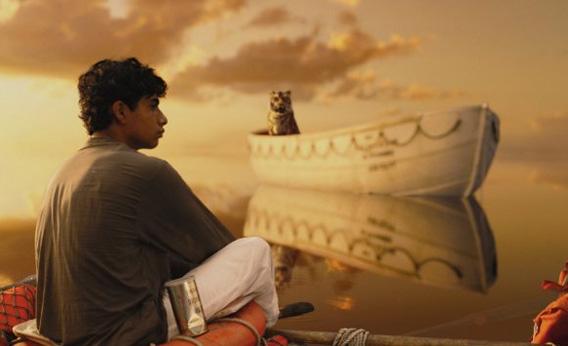
Opinion: I call B.S. on Life of Pi philosophy


The beautiful book and its movie adaption, Life of Pi, may benefit some religious fundamentalists, but a closer look at its message reveals a pseudo-philosophy that doesn't hold water.

Religion relies on a person's willingness to disregard truth and logic for a payoff (faith). Talk with any believer and almost every one will admit this without shame. Pi's religion (a hybrid with the overarching belief that any type of faith is better than no faith) skips all the rules and orthodoxy to reach today's audience, but is still faith-based.

When it comes to the uncertainties of life or which story is actually true, Martel says that since we can't know the truth, it's better to pick the magical story (in his metaphor, the tiger story). He's justifying religions the world over. Unfortunately, to make his perspective appear both new and respectable, he has to misrepresent other perspectives, mainly atheism and agnosticism:

Atheists are my brothers and sisters of a different faith, and every word they speak, speaks of faith. Like me, they go as far as the legs of reason will carry them – and then they leap (35).

I can well imagine an atheist’s last words: ‘White, white! L-L-Love! My God!’ – and the deathbed leap of faith. Whereas the agnostic, if he stays true to his reasonable self, if he stays

Opinion: Five social pet peeves


In addition to previously shared words and phrases that should not be allowed to exist, here are a few of my social pet peeves:

1. "Teamwork" as an empty, feel-good catch-all phrase.  Meant to increase performance, it usually comes from weak-minded leaders who don't have too many great ideas of their own. There are good academic publications by Harvard Business School and others that focus on the facts of successful business teams. Get rid of the meaningless buzz phrase!

2. Excessive focus on workplace harassment training. I become bothered and agitated when I hear poor grammar. Does this mean that I should sue an employer that allows someone to speak poor grammar around me? Of course not. Everyone is offended and agitated by different things. Corporations are forces to go over the top to prevent ridiculous law suits because they've been allowed by the courts and we have to sit through classes that teach the obvious.

3. General Ignorance about food. As a vegetarian, I find myself discussing food more than I'd like to, but like other issues like religion and politics, people don't have a clue. They defend shallow stances they've heard on talk radio or been practicing mindlessly since childhood.

4. Conversation limited to TV, restaurants/bars, movies, and drinking alcohol. People rehash the same conversations for a lifetime just inserting different nouns. Let's move on...

5. People who drive slow in the left lane. Where do these people come from?

For a huge database of more pet peeves, check out GetAnnoyed.com.

Saw III, Carl Sagan, and self-extermination

I'm almost embarrassed to admit that I watched the first three Saw movies last week. My wife and I had borrowed the movies for Halloween, but never got around to watching. I finished all three with mild amusement. The plot twists and creative torture devices are fun, but I'd rather be watching Cloud Atlas.


One thing I did like, and only came to fully appreciate after seeing the following video from Symphony of Science, was the movie premise: a killer who creates tests in which victims must kill themselves due to their failure to overcome their own faults. This premise was perfected in the third movie when the Jigsaw Killer sets up a game to test his pupil whose inability to overcome her emotion and blood-lust leads to her death. Here is a clip if you need a reminder.

A similar attitude is reflected by Carl Sagan in the Symphony of Science video in the line, "If we do not destroy ourselves we will one day venture to the stars." I believe this in both a literal and metaphorical sense. Humans are extremely powerful. The faster we move past the faults practiced by the weakest and most selfish of us, the more we will achieve. The more we succumb the more likely we are to create a hell similar to that depicted in Saw (think atrocities resulting from religious and political hate).


Knowledge: Are kids worth it?

My little sister after getting into the make-up

Here are a few interesting articles about whether to have or not have children. If your mind is made up and you read nothing else, at least take a look at the last link (27 reasons why kids are the worst). It will brighten your day.

1. Does Fatherhood Make You Happy?

Studies reveal that most married couples start out happy and then become progressively less satisfied over the course of their lives, becoming especially disconsolate when their children are in diapers and in adolescence, and returning to their initial levels of happiness only after their children have had the decency to grow up and go away. When the popular press invented a malady called "empty-nest syndrome," it failed to mention that its primary symptom is a marked increase in smiling.
Psychologists have measured how people feel as they go about their daily activities, and have found that people are less happy when they are interacting with their children than when they are eating, exercising, shopping or watching television. Indeed, an act of parenting makes most people about as happy as an act of housework. Economists have modeled the impact of many variables on people's overall happiness and have consistently found that children have only a small impact. A small negative impact  [Full article on Time].

2. Does having kids make you less happy?

However, research that takes into account parents' different circumstances indicates that parents who are able to spend more time taking care of their children "take much less of a happiness hit from having kids," according to economist Betsey Stevenson.
We may be answering the wrong question. The question is not how much happiness children bring or take, but how good is the happiness? We need to return to a precept that social philosophers and religious texts have long extolled: that a good life is not one centered around squeezing as much pleasure out of life as possible [Full article on CNN].

3. A former post on my sister's redecoration of our house


Thoughts inspired by Larry Wachowsky's sex change

By Tyler Samien
As posted on WhenFallsTheColiseum

Recently, I saw a post on Facebook from someone who had learned of Osama Bin Laden’s assassination an entire year after it happened. As a well informed American, he was shocked that he had initially missed the story.  I’ve never missed news as big as Bin Laden’s death (as far as I know), but I can relate. I was just as shocked when I learned recently from a New Yorker article on the upcoming Cloud Atlas Movie  that the Wachowski Brothers are now the Wachowski Siblings and Larry is now Lana.

What concerned me on learning about the “siblings” was not the news (who really cares?), it was the thought that I may be out of touch.  Supposedly, the big news on Lana was in 2008, I was way behind. I was forced to justify my ignorance by either (1) convincing myself that I should be proud of my chosen news sources for withholding such frivolity or (2) convincing myself that the daily proliferation of ever-changing information means everyone (you included) will eventually miss something important. I chose the latter.


Hopefully you don’t choose the day Osama Bin Laden is killed to go overnight camping in a wilderness without cell service and spend the week after in a self-loathing pit of media avoidance and drunkenness due to a breakup, but it could happen. As a child, you could miss the bus the morning you were supposed to learn what a BJ is and decades later, be mocked for your ignorance at work.
How does it feel to know that there are probably obvious things you don’t know that everyone else does? That these things may be waiting to surprise you when you least expect it? Depending on your personality, the thought can be scary or fun. It reminds of something that happened to my sister recently.  [Read More]

Thought: Tragedy of death is based on perspective


A story in the newspaper about a 97-year-old who dies in his sleep evokes considerably less sorrow than another about a 14-year old who dies in a car accident. At first glance, the discrepancy has a simple explanation involving expectation. We expect someone to die when they are old. To be comfortable when our expectations are met is normal, but I think there is more to it. After all, we also know it's normal for people to die at all ages. For some reason despite this knowledge, we react as if we think there is someone in charge of giving everyone a certain amount of life and when this doesn't happen, a mistake has been made.

The shoulders of giants: exponential knowledge and the internet


Whenever I think I have a good idea, writing or otherwise, I've made it a habit to search the internet before continuing. I run it through Google using multiple variations and phrasings of the idea and, as expected, many of my ideas have already been had; often times in a better or more developed form than mine. The truth is humbling.

I do this for reasons other than grounding my ego. Mainly, it allows me to get from point A to point D in the time it would normally take me to get to point B only. Once at point D, I can then decide if I want to add my own thoughts and possibly take the discussion to point E or take a few steps back and develop D v2.0. In the past, people could stay at points A and B thinking they had a unique and developed perspective, but that's no longer the case. Technology and, more importantly, knowledge in all fields is growing rapidly and

Opinion: How I resolved trust issues in my relationships

Until a couple years ago, I always had issues trusting my significant other. No matter how great they were, my distrust of people in general bled over into my relationship. I was never obsessive or over-the-top, but it definitely caused small anxieties and annoyances. I think the main reason it went away was age, marriage, experience, and finding someone I'm comfortable with. Additionally though, without getting too deep into relationship advice, I realized the following:

1. Distrust is not about the other person. Feeling distrustful, though related to the other person, has mostly to do with you. Figure it out. For me, it was a low expectation of people in general-- my worldview.

2. My world view improved when I realized that if I could trust myself, the world couldn't be such a bad place. Even if I was the only one trying to live by certain standards, I count as someone. If I was living up to a certain moral standard, certainly others are too. Even if every person I know turns out to be a terrible person, it's a small sample. It sounds almost crazy putting it in writing, but internalizing this realization was a big moment for me-- bigger than just the issue I'm writing about here.

3. Unfaithfulness and falsity in itself is not the root problem for most people. If someone is acting falsely, there is probably a more serious issues to worry about than the act of cheating or lying, itself. Work to prevent these issues and if something does happen, use it as an opportunity to identify root problems or acquire new freedom. Value yourself over your relationship.

Developments in the moral guidance of mainstream comedy

With the rise of comedians like Louis C.K. and Bill Hicks the complexity of comedy is increasing. Comedy is no longer three idiots poking one another in the eye and farting. It's no longer even just an irreverent and humorous dismantling. As religious explanations fall further and further behind the evolutions of society, comedians have stepped in to fill the gap. Comedians are the new preachers, comedy clubs are their churches, and the audience members that understands it are the frustrated moral progressives.

Comedy has always been used to influence opinion. Satire and wit serve to exhibit intelligence and bolster respect for the comedian. A jaded discontent on the part of a comedian taps into the restlessness of youth and challenges flawed power structures. In exchange for being receptive, audiences receive a laugh, and a pleasurable listening experience. It's a powerful medium for information delivery.

This form of delivery has most often been used to poke fun and reveal the ridiculousness of behaviors, traditions, and social mores. In short, comedy improves society by breaking it down. Comedies like George Carlin mock religion, Lewis Black pokes fun at politicians, and Jim Gaffigan gets a chuckle from the horrors of food addiction. Until recently, moral guidance has been left to its traditional sources: religion and its ministers. Things are changing.

Analysis of life, healthy doses of fatherly advice, and exploratory spiritual sketches on the meaning of life are among the newest developments. Unlike traditional moral guidance, behavior and language are shallow indicators of moral principle. Comedians understand this with their colorful language and perverse descriptions. This seems to be in line with the realizations of many liberated ex-religious. Leave puritanism to fossilized Quakers and Christians who, without the 10 commandments would apparently forget how to behave and eat each other alive. Purity and wellness are not as simple as doing and saying the right things. Like this post, many comedy sketches are just vague attempts at progress; abstracts, but who really has the answers anyway?


Bill Hicks:

"The world is like a ride in an amusement park, and when you choose to go on it you think it's real because that's how powerful our minds are. The ride goes up and down, around and around, it has thrills and chills, and it's very brightly colored, and it's very loud, and it's fun for a while. Many people have been on the ride a long time, and they begin to wonder, "Hey, is this real, or is this just a ride?" And other people have remembered, and they come back to us and say, "Hey, don't worry; don't be afraid, ever, because this is just a ride." And we … kill those people. "Shut him up! I've got a lot invested in this ride, shut him up! Look at my furrows of worry, look at my big bank account, and my family. This has to be real." It's just a ride. But we always kill the good guys who try and tell us that, you ever notice that? And let the demons run amok … But it doesn't matter, because it's just a ride. And we can change it any time we want. It's only a choice. No effort, no work, no job, no savings of money. Just a simple choice, right now, between fear and love. The eyes of fear want you to put bigger locks on your doors, buy guns, close yourself off. The eyes of love instead see all of us as one. Here's what we can do to change the world, right now, to a better ride. Take all that money we spend on weapons and defenses each year and instead spend it feeding and clothing and educating the poor of the world, which it would pay for many times over, not one human being excluded, and we could explore space, together, both inner and outer, forever, in peace."

Louis C.K.:
"I'm bored" is a useless thing to say. You live in a great, big, vast world that you've seen none percent of. And even the inside of your own mind is endless. It goes on forever inwardly. Do you understand? Being the fact that you're alive is amazing, you don't get to be bored."

[On suicide]
"I got my reasons to live, I've worked to figure out what they are, and I'm not just handing them over to you.... If you wanna tap out 'cuz your life is sh*t, ya know what, it's not your life, it's life ... Life is bigger than you, if you can imagine that. Life isn't something that you possess, it's something that you take part in."


[On work and fulfillment]


What are some of your favorite comedian quotes?

Literature: "Men in Books" and the limitation of fictional representation


1. Excerpt from Men in Books (Salon): "What do we desire from our American literary male protagonists these days? ... it’s more what the protagonists — and their authors — want from us that stands out. They are looking for approval, especially from women, [Eleanor] Blair thinks. She identifies a youngish generation of writers, including Sam Lipsyte and Gary Shteyngart, who tend to proffer schlumpy guy characters rejected by women, failing in their monotonous jobs and obsessively insecure in their masculinity...." [Read full article here]

2. Similar to the topic above is the limitation of fictional representation. I've been thinking about it lately so I'll post the rough thoughts here.

What do writers and movie directors really know about the intelligence of the average scientist or professor? The best authors are the best empathizers, but this doesn't change the fact that every word spoken on screen or in a book by a doctor is originating in a writer's mind. What do the audience members who are not part of these groups then know of these groups besides what they see written and directed? How many representations of people in movies and books pander to our flawed conception of the character to make it believable to us? How much does the portrayal of fictitious characters define roles and impact how real world people act?

If suddenly all portrayals of truck drivers in books, media, and news interviews portray them as book worm intellectuals, would real-world truck drivers change? If Harley Davidson decided to drastically change the image of the "Harley Man" could they get the masses of bikers to follow?