Labels

Showing posts with label Eating Animals. Show all posts

Eating Animals: Eating lamb on Easter makes sense, how?

I can't get my mind around how twisted it is to eat lamb on Easter. No offense to Facebook friends who posted this year about their delicious lamb dinner; you're the ones who made me think about it.

The lamb exists in Easter tradition because Jesus was the "lamb of god", sacrificed for sin. Pretending for a minute that this makes any sense, doesn't that mean Christians are recreating the act of those who crucified Jesus, the lamb? This lines up with a Christian theology that tells us we're sinners who are saved by the crucifixion, but aren't Christians supposed to be like Jesus and not the Romans who killed him? We don't celebrate Veterans Day by dressing as enemy soldiers and trying to shoot veterans. Wouldn't it make more sense to buy a lamb from under the ax and set him/her free as a symbol of the resurrection being celebrated?

Vegetarianism: The journey to improve more than just diet


I recently read an article by someone who said the reason he stopped being a vegetarian was that vegetarians don't see the big picture. The writer went on to say that not eating meat wasn't solving bigger problems like the destruction of animal habitats or the depletion of resources, so he was done with it. Obviously, the author has a few shortcomings in sequential reasoning, but his point is valid to the point of inspiration.

Not eating animals doesn't create new habitats, plant trees, or reduce overpopulation. It doesn't mean that vegetarians have a positive net impact. This is particularly true if someone is a vegetarian who buys products with genetically modified, unhealthy soy or supports other examples of bad business. 

As the evidence rolls in, it's clear that the average vegetarian is healthier, happier, and harming less than a carnivore. But outside of killing, the overall impact has less to do with eating or not eating meat and more to do with the source and process of creating either. There are meat-eating farmers who are less destructive than vegetarians living in a city. There are vegetarian farmers who use pesticides and

Vegetarianism: Eating people, dogs, and at least lets be genuine, shall we?


Most carnivores are disgusted by the idea of eating dogs or people, so its ironic that as a vegetarian imagining life as a meat-eater, I have very little issue with it.

Many responsible carnivores justify their diet by pointing out that farm animals have a much better life on a farm than they would in the wild because, despite being killed for food, they live longer and are free from the fear of predators and many diseases. I can understand that. I think eating meat is unnecessary, but I respect people who buy local meat and make sure the animals they're eating are treated well.

Because animals don't speak English and perhaps don't have the ability to compare complex options, we can't ask them if they'd rather live and die on a farm or be in the wild, but I can imagine some humans might even choose a shorter life of comfort if presented with the same options.

If a human agrees to live on a farm and be eaten, would it really be wrong to eat them? Would it be more, or less, wrong than eating a non-human animal against their will? Certainly it would be more moral than the torture and drugging many animals currently go through?

To be clear, I don't think anyone should be eating any animals, humans included. It's entirely unnecessary for survival, it's generally unhealthy and in so many ways. But, if it came down to my survival I'd eat meat again, and that includes all kinds. I'd at least be genuine about it.

If you're a carnivore and willing to try an empathy exercise, image search, "eating dogs" on Google. If you feel disgusted and appalled, understand that this is how many vegetarians feel about other animals you eat. With more and more studies showing how smart animals are, they are more justified in their perspective. Last week I shared a great article called One of Us that summarizes this beautifully.

**This is part of a series of posts on vegetarianism in which I'll try to avoid the cliche topics of the lifestyle. New posts on Thursdays. Click on the "eating animals" tag above for more.**

Vegetarianism: We are animals, slaughterhouse webcams, and Morrissey

My weekly series on vegetarianism is winding down. I'm exhausting the ideas and reasons I have for being a vegetarian that I haven't seen written elsewhere. Next week I'll write about eating people and what circumstances would lead me to start eating animals again. In the meantime, here are some other articles and links.

1. Laphams Quarterly: One of Us. A good article for Christians and the religious. This article takes"humans are animals" to new levels with religious tie-ins further into the article.

In the New Testament... there’s that exquisite verse, one of the most beautiful in the Bible, the one that says if God cares deeply about sparrows, don’t you think He cares about you? One is so accustomed to dwelling on the second, human, half of the equation, the comforting part, but when you put your hand over that and consider only the first, it’s a little startling: God cares deeply about the sparrows. Not just that, He cares about them individually...

2. NY Times: Open the Slaughterhouses. New laws might make it illegal for people to investigate slaughterhouses by posing as workers. This editorial suggests transparency.

Opponents might compare this proposal to bills that require women to view images of their fetuses before having an abortion. The resemblance is misleading. Those laws intrude on intimate, difficult decisions involving a constitutional right. In contrast, open-slaughterhouse laws would not force anyone to look at anything. They would just increase our resources for thinking and arguing. A teenager debating her parents at the dinner table, or a parishioner discussing the ethics of eating meat with fellow church members, would be able to pull out a cellphone or laptop to support his or her arguments.

3. Morrissey Quotes on animal activism

(Eating meat) is really on the same moral level as child abuse. It’s the same thing. Animals are like children, they look to us for protection. We should protect them. I really feel quite smug about mad cow disease and foot and mouth and so forth, and I just think ‘Well, what do you expect? People have been saying it for years.

4. Not necessarily about vegetarianism, but my wife (who is a vegan) is in the first stages of health coaching. See her page here. Interesting fact, BetterYou.com is for sale starting at $9,500. My wife bought BetterYouHealthCoaching.com for... (drumroll)... $1.

Vegetarianism: Why vegetarianism is good for relationships

 (Post card from a Veg Fest 2013 in Austin)

I never realized how great vegetarianism was for my marriage until I looked back on the first year of being a vegetarian. Being vegetarian creates a common interest in recipes, education, and news. We're able to share in conversations with meat-eaters and become excited about the same restaurants and food-related discoveries. It sounds small, but common interests are vital to the success of any relationship and being vegetarian is an engaging interest that impacts multiple areas of shared life.

I don't know if I'll be a vegetarian forever, but having a wife who feels as strongly as I do about it, makes it easier and more enjoyable to continue. It's hard for me to imagine being a vegetarian with a girlfriend or spouse who isn't supportive. It reminds me of growing up in the church and hearing how important it was to find a Christian spouse or to attend a Christian school.

Vegetarianism becomes something that is shared. Grounded in social responsibility and healthy intake, it creates a common passion that brings people together. I wouldn't suggest becoming a vegetarian solely for these reasons, but it's a great benefit.

While religion has worked for the relationships of people like my grandparents who have been married over 50 years and attribute it entirely to religion, vegetarianism, for many people, is one part of a new foundation-- a new belief system based on social/environmental responsibility and self-care. It's something that couples can do together to make a difference in the world, to their health, and to strengthen their relationship.

**This is part of a series of posts on vegetarianism in which I'll try to avoid the cliche topics of the lifestyle. New posts on Thursdays. Click on the "eating animals" tag above for more.**

Vegetarianism: Calling out the "forgetting what good food tastes like" myth


A go-to statement for critics of vegan and vegetarian food is that "vegetarians have forgotten what good food tastes like". Browse vegan restaurant reviews and you'll quickly find someone stating how great a particular restaurant is-- but only for vegans. This perspective, expressed by meat-eaters conveys that vegans have become accustomed to tastes of mediocrity.

This seemingly benevolent type of valuation makes sense when talking about meat substitutes. Vegans who tell a meat-eater how much tofurky or veggie bacon tastes like real bacon or turkey are deluded. But, this attitude has migrated from talking about meat substitutes to the notion that all vegan food is a compromise and meat eaters should avoid these restaurants. It's a myth propagated by a misinformed majority dependent on salt and fat.

Try this experiment at home or along with me in your head. Think of (or try) the taste of chicken if it was not fried in oil or seasoned in any way. Imagine the taste of beef without any added marinade or spice. What flavor is it that you like so much about your favorite meat dishes? Compare the flavor of the plain meat to the range of flavors in the pictures above. Certainly, farm-fresh, properly fed, non-drugged, cleanly slaughtered animals have taste. Certain types of fish and a quality steak have taste, but for the most part, particularly with fast-food meat, flavors come from spices and other additives that are vegetable based.

It's many meat-eaters who have conditioned themselves to appreciate a narrow variety of food, not the other way around. Viewing thousands of diverse flavors only as a way to enhance a handful of often bland meat varieties is silly.

Yes, there are meat eaters smart enough to avoid low-quality meat who enjoy their food like a fine wine or coffee. But, in general, the perspective that vegan restaurants serve bland food is only for meat-eaters with over-stimulated and numbed out taste buds, and should be recognized as such.

**This is part of a series of posts on vegetarianism in which I'll try to avoid the cliche topics of the lifestyle. New posts on Thursdays. Click on the "eating animals" tag above for more.**

Vegetarianism: What about protein??


I was going to write about protein for today's post, but there is enough information elsewhere online that I'll keep this brief. Protein is another frequent topic of conversation between vegetarians and non-vegetarians. Where do you get your protein? or I'm sure you eat a lot of nuts and beans, non-vegetarians say. But like other common food perceptions (like milk is healthy), the notion that protein is best found in meat isn't true.

Here is an article, Do We Need Meat For Protein?,  that explains it better than I could. Some Q&A from that article: 

What has more protein: Oatmeal, ham or a tomato?

Actually they all have about the same. The difference? The tomato (and oatmeal) come with fiber and other important nutrients. The ham comes with cholesterol and saturated (bad) fat. It’s like dating that guy who is good looking, but a complete screw up in life. Or… that other guy, who has the whole package. Which to choose, which to choose?

Which has more protein 100 calories of broccoli or 100 calories of steak?

Actually it’s broccoli. Both spinach and broccoli have close to 50% of their calories coming from protein. What about steak? It has about ½ the protein as 100 calories of broccoli... [read more here]

Vegetarianism: Should vegetarians eat fast-food?

In a recent post, I pointed out that many vegetarians focus on keeping meat away from their mouths more than they focus on things that matter like preventing animal abuse, staying healthy, and buying food responsibly. My point was wonderfully illustrated by comments on the article. Unless you're a vegetarian for the image and feeling, your behavior should reflect more than just your attitude toward meat (or lack thereof). Reducing animal exploitation, increasing availability of healthy foods, and other typical vegetarian causes require that we act intelligently when talking to others and spending money.

With that in mind, should vegetarians and vegans eat fast-food? I was surprised to learn that PETA, the organization uncompromising enough to decry pet ownership, thinks so:

Some well-meaning vegans have chosen to ignore the fast-food and chain restaurant market because of its emphasis on animal flesh, but the bottom line is this: In order to convince meat-eaters to stop eating animals, vegetarian options must be convenient and available in the places where meat-eaters munch. There will never be vegan or vegetarian options at restaurant chains unless vegetarians and vegans support them.

The article goes on to recommend over a dozen vegan options offered by major chains. Besides the obvious truth, that there are many ways to convince meat-eaters to stop eating animals besides having vegetarian options where they eat, I have to agree with PETA's stance. Vegan options in fast-food restaurants are a good thing and we want to keep them there. However, other detrimental side effects resulting from fast-food makes me recommend it sparingly, particularly for vegetarians/vegans.

1. Having vegan options doesn't change fast-food's value: A "vegan-friendly" rating by directories like HappyCow means the restaurant offers vegan options, not that the company is particularly friendly to vegans or the community in general. Corporations and the chains they own are “friendly” to people with money. Once any company determines money can be made from offering vegan items at its restaurants, it will. Supporting these restaurants still supports harmful, cheap, food. It enables the company to grow larger through public advertising and new restaurants. Why would anyone want to support this type of eating in their community on a regular basis, vegetarian, or not?

2. The receipt doesn't say you're vegan: Buying a veggie burger or subway test sub is a vote for the vegetarian, but many vegan or vegetarian options are side items. They're eaten by all types of people, often alongside a burger. When items like side salads, baked potatoes, and coffee are purchased, the money anonymously supports corporate advertising and growth. If you want to support vegan options and ideals, buying a side item or coffee isn't the way to do it.

3. Eating at a fast-food restaurant means you're not eating somewhere else: This seems obvious, but many people don't consider it. If you're a vegetarian, supporting restaurants with similar values is important. As mentioned above, most corporations base whether to offer vegan options on sales statistics. This is different from many independent restaurants that are run by people who genuinely care about animals and healthy eating. I'm sure these entrepreneurs want to make money, but there is usually more going on. I've seen firsthand how these restaurants offer classes, provide information, and support local farming. It's something you might see in other independently owned restaurants that serve meat, but not fast-food. As Breaking Bad taught us, fast-food restaurant owners are just passionate about selling meth.

4. If you don't, someone else will: Eating at fast-food restaurants is often more convenient than eating elsewhere. Sometimes when traveling through a food desert or with friends, it's the only reasonable option. Chances are you'll eventually have an opportunity to try that vegan option. Why not eat elsewhere whenever you can and let the fast-food restaurants get support from vegetarians who aren't as strict with their diet or when you're short on options? I don't think the success of a new vegan entree requires that every vegetarian in the city swing by to try it. That money is better spent elsewhere.

5. Vegan ≠ healthy: Just because a fast-food restaurant offers a vegan option doesn't mean that it's healthy. It just means animals weren't harmed. Being a vegetarian to help animals is honorable, but being healthy for your future self is doubly so. Contrary to popular opinion, supporting an unhealthy diet is something both vegetarians and meat-eaters are guilty of. Many meat substitutes aren't healthy at all. I wrote about them in last week's post.

6. Power of opinion: Sometimes the best way to make a difference is by writing a letter or posting a review online. Companies take this input seriously, particularly when in bulk. Writing a request for veggie burgers at a local chain is probably more effective than eating a side-salad there regularly and hoping the restaurant gets the idea.

Writing this post has made me hungry-- off to eat something; something that's not fast-food!

**This is the third part of a series of posts on vegetarianism in which I'll try to avoid the cliche topics of the lifestyle. New posts on Thursdays. Click on the "eating animals" tag above for more.**

Vegetarianism: Misconceptions about meat substitutes


I'd wager that vegetables are the first thing that comes to mind when most people think of a vegetarian diet, but meat substitutes aren't far behind. When talking with new friends or co-workers about vegetarianism, it usually isn't long before the topic of soy and cooking without meat comes up.

I've heard many carnivores wonder out loud at how vegetarians can "survive" with only that "soy sh%$ instead of "real meat" in their cooking. I've also heard multiple former vegetarians claim that the reason they stopped being a vegetarian was the price of the food (meaning processed food). Both of these groups are subject to the same misconception.

Here is the deal:

Most healthy vegetarians don't live off the vegan frozen food section of their local grocery store. Whole Foods, Earth Fare, Fresh Market, and even Walmart offer a variety of processed meat substitutes like bacon, hamburgers, chicken nuggets, and sausage in their frozen food section. These foods (some of them anyway) are a good indulgence when a vegetarian doesn't feel like cooking, but most are just as processed and unhealthy as other meaty frozen foods. Just take a look at the nutrition facts and ingredients. They're high in sodium and contain a host of unpronounceables (usually not a good sign). Many of these foods are
also expensive and many don't really taste like the meat they're emulating.

Vegetarians instead (those that use meat substitutes at all) use ingredients like soy, seitan, textured vegetable protein (TVP), and tempeh to make their favorite meals at home. Some of these ingredients are also highly processed, but making a meal from scratch is usually healthier, tastier, and cheaper than buying frozen foods from the store.

When making meals using these ingredients, there is often no discernible difference between the real meat and fake substitute. It makes sense considering that most meat bought in grocery stores has very little natural flavor.  It's washed in ammonia to kill bacteria and soaked in brine to add flavor (and weight). In the end, this cheap meat only tastes as good as the spices or flavors it's combined with. If you've ever tasted unflavored

Vegetarianism: Should vegetarians allow themselves to eat meat from the plates of others?


When I first became a vegetarian, I decided it was more important to withhold financial support from the meat industry than be a stickler about the diet. I wasn't ready then (or now) to become an activist against the meat sellers by holding protests or burning down slaughterhouses. I felt that a vegetarian is defined by primarily living on a vegetarian diet and not by the absolute absence of meat.

I decided I didn't have a problem eating meat that would otherwise go to waste. You know-- the taste of shrimp linguini or other delicious-type entree offered by family members and close friends. The food that would otherwise be thrown away and doesn't create another order in the kitchen.

Why don't more vegetarians think this way? Why do so many vegetarians avoid meat to the point of offending others by declining a specially made dish or letting delicious shrimp linguini go to waste? Here are a few reasons:

1. Exaggerated self-importance
Some vegetarians seem to view vegetarianism  like an arcade game. If they get a perfect score, they'll get a prize and all the animals will stop suffering. These are the vegetarians that are militant about never eating meat, who brag about "how long it's been since I had meat last". There are more legitimate reasons for never eating meat (below), but to take it this seriously without one is silly.

2. Unavoidable disgust
This is the feeling a vegetarian gets when the meat is on the fork. It's similar to guilt, but different. Most vegetarians can reason past the guilt if the meat will be thrown away (I certainly can), but they still might not eat because they know too much. It's both a physical revulsion at the meat's composition and an ethical disgust for what they perceive as a societal wrong. Many vegetarians are extremely caring people who aren't trying to be difficult, they just can't help but react emotionally because of what they know and who they are.

3. Reputation
While I consider being mindlessly militant about never eating meat a negative (see #1), maintaining a reputation as a vegetarian who takes their beliefs seriously is important. Though vegetarianism and related wholesome food movements are spreading, vegetarians are still a minority. This means a lot of people look to vegetarians as a different type of person-- they're tested. It's a social reaction that happens whenever a minority group feels passionate about something. If someone calls himself a vegetarian but eats meat whenever he feels like it, people may dismiss him and

Vegetarianism: A series of posts on personal experience


Starting next Thursday and continuing on subsequent Thursdays (for a few weeks anyway), I'll be posting about life as a vegetarian: thoughts, ideas, resources. I don't intend to share the details of "why" or beat anyone over-the-head with reasons. I'm past all that-- the information is everywhere. Instead, posts will include among other things:
  • Why I think it's ok to eat meat off other people's plates (but don't)
  • Why vegetarian food tastes better (most the time)
  • Why it's fun being a vegetarian
  • And..... How being a vegetarian has improved my love life
How is that for a teaser?

Other related posts and articles:

 When Falls the Coliseum: Why I've stopped eating Animals
 Reluctant Chauffeur : Vegetarianism Posts

New site: VegWonk.com

Apparently, wonk is a fairly common word, but it's a new one for me. From Merriam-Webster:

Wonk noun \ˈwäŋk, ˈwȯŋk\
: a person preoccupied with arcane details or procedures in a specialized field; broadly : nerd <a policy wonk> <a computer wonk>
A vegan wonk as in someone preoccupied with the details and ideas behind being vegan and the new website Lindsay is working on with a friend from TN. The site is still being built. More information to come!
 
VegWonk.com - Veg Stuff with Your Trusty Veg-Lovin' Friends...

Vegetarianism: Peer pressure 18th century style


No Gravatar
Here is a short introductory post to an upcoming blog series on veganism by M. Elias Keller that I'm looking forward to reading: Vegan Reason (Part I) in which he references an older article I wrote on why I stopped eating animals.

"Let’s start with a little vegan trivia. Below is a passage from an autobiography of a very famous person—no doubt you’ve heard of him. The incident in the passage occurred in the late 19th-century, in England, although the person is not British. See if you can guess who wrote it (without Googling)—and in my next entry I’ll reveal the answer and begin my discussion in earnest. "
[full post]

M. Elias Keller's blog can be found here (I've had to forgive him for removing the link to my article in his blog version of the post).

Mushrooms!


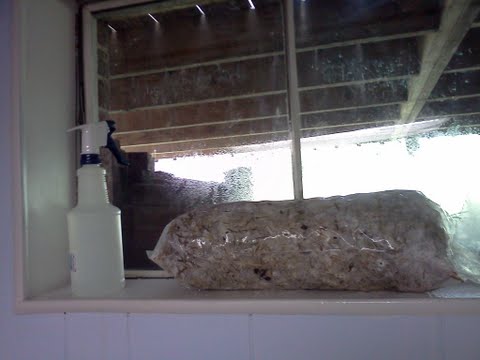
I've always had a taste for mushrooms, so I was excited to find my friend, Andrew, packing "mushroom kits" to sell at his local farmer's market on a recent visit to his house. With oyster and shitake mushrooms priced as high as $10 a lb at some local grocery stores, I was more than willing to give it a try.

Andrew starts by growing some type of culture in a jar then mixes this with straw. The final mixture is packed tightly in plastic and put to grow in indirect sunlight. Let's see how it goes...

Subway offering vegan options in limited markets


With the exception of Taco Bell, which hasn't been the same since I quit eating animals, I rarely eat at the big fast food chains. I don't like sticky floors. The people depress me. The food makes me nauseous. I was glad, however, to see that Subway is testing vegan options in the Washington D.C. area. It means the vegetarian market is growing. Other restaurants may follow along. People may try some of the of the soy or black bean sandwiches and like them.

I'm hoping to stop by and try one soon.


Fake Meat Never Tasted So Good: We Taste-Test Subway's New Vegan Subs, and Like Them