Labels

Showing posts with label Philosophy. Show all posts

Opinion: John Cage, Silence, and pop music


Containing small print, unique punctuation, lists of questions, and other means of presentation, Cage's writing, like his music, is often dense and unconventional. One benefits from taking it at whatever pace is necessary for understanding. It's anything but "pop" which may be creative and somewhat rebellious, but is rarely unconventional. "Pop" being defined here as a type of music that is easy for a majority of people to listen to (popular). If music is created for simple pleasure, it follows that pop music is great. If, however, music, is more and does more, isn't pop mostly just music's form of stagnation?

“What is the purpose of writing music? One is, of course, not dealing with purposes but dealing with sounds. Or the answer must take the form of a paradox: a purposeful purposeless or a purposeless play. This play, however, is an affirmation of life--not an attempt to bring order out of chaos nor to suggest improvements in creation, but simply a way of waking up to the very life we’re living, which is so excellent once one gets one’s mind and one’s desires out of its way and lets it act of its own accord.” 

I had the privilege to attend part of a recent John Cage city-wide event in Philadelphia earlier this year. A thought developed between hearing the music and rereading Silence that involved the evolution of musical taste and tolerance. Certain Cage compositions are produced by chance operations that don't always result in harmony. They sound unpleasant to many. His music is meant to, among other things, represent the same combination of sounds created by seemingly chance operations in the world.

If Cage is correct in his assertion that music is everywhere and life can be better enjoyed by reducing the barriers we create about what music is, shouldn't we push ourselves to progress by abandoning that which we find easy to listen to? Isn't growth and progress usually preceded by discomfort? If we avoid pop music and push ourselves to enjoy less typical rhythm and harmony are we doing ourselves a favor or denying a simple pleasure of life?

Like, most things it appears to be a balance. Cage's music wasn't all random and displeasant to unaccustomed ears. We like music because it is a human creation, a celebration of us. Unlike contrived music, the music/sounds of life and nature are bigger than us. A little of both and the recognition of the differences; not of sound and music, but of human contrived music and the music of life, could be a good thing.

Despising your job?

Long-term job plans should should make fulfillment the top priority, but in short-term stepping-stone jobs and temporary situations, it's enough to simply not despise a job. That sounds like a low standard, but think of all the people you come in contact with or have worked with that despise their jobs, but don't make any changes. It's more reflected of the individual than the job and it's pathetic. The workplace can be rough due to intolerable bosses and poor conditions among other things, but if it's not worth the pay or return-- leave. If it is worth-it, how bad can a situation that you are voluntary putting yourself in, really be? Certainly not bad enough to hurt your emotional condition over.

Everyone's heard the adage "Do what you love so well someone will pay you to do it". It's a nice idea, but impractical advice for most people who value a decent standard of living. Like most folk wisdom, it's too simple. It's worth working towards, though. This video summarizes the ideal in a beautiful way:

Quick Quotes 28: Antiquote on aging

"Do not regret growing older. It is a privilege denied to many."
-Unknown Source

I agree that one shouldn't regret growing old and changing one's mindset to view aging as a privilege can accomplish this if nothing else works, but it's a cheap low-level wisdom.

It's similar to an employee who justifies staying at a miserable jobs because "I should be grateful I have a job" or an abused spouse who doesn't fight for improvement or leave because "it's worse elsewhere".

There will always be someone less privileges or in worse condition to look to for motivation. Even if you're the most deprived human in the world (if you're reading this you aren't), you can look to history or create fictional alternatives. If anyone can use this trick, then quotes like this aren't saying anything besides, "be grateful at all times".

Let's get to the heart of it then.

The value of your life is intrinsic and shouldn't be derived from the misfortune of others. If you're having to be glad you're not dead to appreciate your life, you're missing something. Life isn't a commodity that increases in value as others fall out unless you're putting it on a market.

Thought: The classic save a child scenario with modern examples of Newton and Costa tragedies


Shortly after the Costa cruise ship disaster last January, I was sitting with some guys at work and the following question became a discussion:  If you were in that sinking ship and saw, in the last seconds you had to escape, a child that needed help, it's you or him; would you save him?

A similar scenario can be created from imagining oneself as a guest in a school were a shooting is underway. Knowing that it's either you or a child you don't know, who do you save?

In real life, outcomes are rarely absolute, so hopefully we'd make the attempt to do what we could, especially if we were a teacher who has accepted responsibility for the children's' well-being, but in a fictitious scenario when we know the outcome, I think the only honest and logical answer is no.

We put things like candy, iphones, and entertainment above the lives of dying children, every day. Someone that saves the child is only admitting that they're too cowardly to be consistent; that the immediacy of the situation is too much to deal with emotionally.

Unless you're taking a break to read this before raiding a mercenary camp in Darfur to

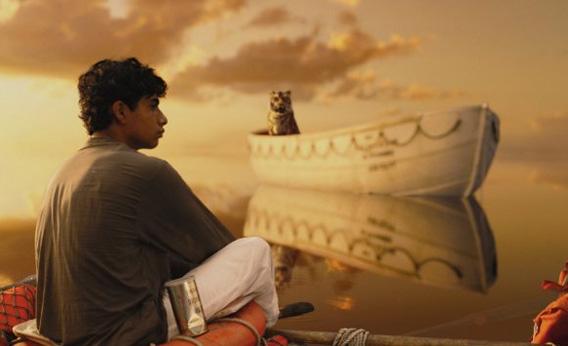
Opinion: I call B.S. on Life of Pi philosophy


The beautiful book and its movie adaption, Life of Pi, may benefit some religious fundamentalists, but a closer look at its message reveals a pseudo-philosophy that doesn't hold water.

Religion relies on a person's willingness to disregard truth and logic for a payoff (faith). Talk with any believer and almost every one will admit this without shame. Pi's religion (a hybrid with the overarching belief that any type of faith is better than no faith) skips all the rules and orthodoxy to reach today's audience, but is still faith-based.

When it comes to the uncertainties of life or which story is actually true, Martel says that since we can't know the truth, it's better to pick the magical story (in his metaphor, the tiger story). He's justifying religions the world over. Unfortunately, to make his perspective appear both new and respectable, he has to misrepresent other perspectives, mainly atheism and agnosticism:

Atheists are my brothers and sisters of a different faith, and every word they speak, speaks of faith. Like me, they go as far as the legs of reason will carry them – and then they leap (35).

I can well imagine an atheist’s last words: ‘White, white! L-L-Love! My God!’ – and the deathbed leap of faith. Whereas the agnostic, if he stays true to his reasonable self, if he stays

Quick Quotes 23: Antiquote William Osler


William Osler

We are here to add what we can to life, not to get what we can from life.
-- William Osler

Osler doesn't know why we're here and anyone's contributions and improvements to the world are ultimately relative. Life is all about the person experiencing it no matter how altruistic they may be. I'd change this quote to: We're not here to add to life but to live it. The best way to get the most from life is by using our life to help others.
A poem by Mary Oliver:
 
You do not have to be good.
You do not have to walk on your knees
For a hundred miles through the desert, repenting.
You only have to let the soft animal of your body
love what it loves.
Tell me about your despair, yours, and I will tell you mine.
Meanwhile the world goes on.

Thoughts on the Cluetrain Manifesto

The Cluetrain Manifesto and its 95 thesis, written in 1999, are worth a glance with or without my following commentary:

As a medium of communication and influence, the internet leads (think: recent events in Egypt. think: wikileaks). However, since 1999, corporations have "caught up" with the internet market; sluggishly at first, now at full speed. Using techniques taught in this class and elsewhere, corporations now know how to manipulate the new medium. Due to contrived positive/negative reviews, blogs, multiple web sites, viral campaigns, and other tactics of misinformation, it is often hard to tell what is legitimate information. The vision created in the manifesto is called into questions as the internet, not the corporation, bends (think of all the legislation since 1999 that has regulated the internet for corporate benefit).

These developments leave the Cluetrain Manifesto as an optimistic but irrelevant article in history-- a "could have been".  The manifesto is reduced to a model of good customer service for all but the most progressive company-- albeit, a good model. Customers are no longer impressed by size and professionalism. They want personal response and human interaction. Create customer dialogues appropriately. Scrap business jargon. Scrap form letters and scripted on-phone conversations for a touch of humanity and personality and the customer will respond.

Labels and signs take away from the experience

 On a recent vacation to New England, my wife and I visited Purgatory Chasm in nearby Massachusetts. Without degrading the experience or beautiful and interesting landscape (see pictures left) I couldn't help but think about the human/land interaction I saw around us.

The first thought involved that of site establishment and labeling. When I was younger, I would spend weeks working at a summer camp in the Catskills. During free time, I would break the rules and leave the camp with friends, striking out across the mountain wilderness. The Catskills were full of cliffs, caves, and rocks, more pronounced than that offered at Purgatory Chasm and other sites having official names, maps, and picnic areas. Sites that are official are often created based on economics, demand, and availability and named to attract attention and interest rather than being particularly unique. What is the effect of hyping nature in this manner? Why did a small nook created by falling boulder have to be called "Devil's Crib" instead of "A little nook under a rock". Why note it at all? The result is an enhanced experience at the cost of a twisted reality and influenced perception.

The second thought on this issue is one that often comes up in postmodern studies relating to representation. Any location has multiple existences: The true place as it actually is, the place as it is interpreted by individuals experiencing it, and the place as it comes to exist in view of a society or group.

The first existence is unknown to us do to the limits of our senses. The second existence is what we create in our minds depending on what part of the place we see, from what angles, and what is going on in the place at the time we are there (weather, crowd, time of day). The third existence is a combination of second existences along with evolutions created by photography, conversation, and writing. People who have never been to the Eiffel Tower, for example, have a sense of the place that will be entirely shattered once they actually visit it. A similar existence is shared by many people who have never been to the Eiffel Tower due to photographs and movies.

The difference between second and third existences is most evident to those who have had the opportunity to travel to many of these sites. My first experience was with the Sacre Coeur in Paris. The Sacre Coeur presents an image of religiously inspired strength and solidity, but the reality is an amusement park line, noise and crowded masses of tours. It is targeted by hosts of peddlers. As people worship, a shuffling line of tourists moves much like at an amusement park. It was depressing. I've experienced similar at popular sites around the world. If tourists were honest, they would admit how many of the popular sites were miserable to attend. Most however, won't be honest because they either don't want to admit they were hustled and are afraid to admit the emperor has no clothes, or are just so overwhelmed at being somewhere so often talked about and pictured that they don't care how miserable it is. These people have accepted the third existence to such an extent that they disregard reality. Here are a few comparisons as examples.


Excerpts: The 55 Concepts by Michael Cavallaro


Found this book at my mom's on a recent visit to PA. I disagree with Cavallaro's use of the word "real" when he writes "emotions aren't real" since they certainly exist and have meaning to the individuals experiencing them, but I like his overall point about caring and belief systems.

The 55 Concepts: A Guide to Conscious Living by Michael Cavallaro

Emotions are not feelings, but we do feel our emotions --  Some people have lived their entire lives believing that their emotions are real; most believe they are something innate that they are born with as humans. Many believe that being unemotional is something inhuman or cold and uncaring. But that fact is that emotions are not real!

Feeling puts you touch with you heart. Feeling puts your intellect in touch with your intuition. Feeling is the only way to know what is in your heart or innermost being that needs to be resolved. Learning to feel is different than thinking what you feel. Thinking your feelings avoids that which you do not wish to feel and allows you to believe you are in control.

Emotions are reactions or responses to belief systems. Your beliefs unconsciously tell you something is happy, sad, depressing or joyful. If emotions were real, then everyone would feel the same about everything. For example, there are places in the world where death is celebrated and places where it is mourned. There are places where eating a dog or cat is normal and others where it is horrible.There are places where you can eat cow and others where you would be offending God to do so.

Although you experience emotions as real, they are only real to you. This is not to say that thay are good or bad, only that you create them at some point in your life and believe them to be absolute. Therefore, if you do not like your beliefs, change them and you will feel and experience your emotions differently.

Excerpt: The Count of Monte Cristo


From The Count of Monte Cristo - Alexandre Dumas

“I possessed nearly 5000 volumes in my library at Rome, but after reading them over many times, I found that with 150 well-chosen books a man possesses a complete analysis of all human knowledge, or at least all that is either useful or desirable to be acquainted with.  I devoted three years of my life to reading and studying these 150 volumes..."

"Learning does not make one learned: there are those who have knowledge and those who have understanding. The first requires memory, the second philosophy...Philosophy cannot be taught. Philosophy is the union of all acquired knowledge and the genius that applies it"

The importance of belief

As people, our actions are most often no more than responses to our beliefs. Consider how differently you would act if you believed differently, if you believed everyone around was a robot set on your destruction or you were allergic to plastic. We feel as though we choose our actions, yet very few of us act counter to what we believe. Likewise, emotions are dependent on belief. If you believed, for example, that god chose to kill people as a reward and that mourning their death was wrong, you would hardly feel sad when a friend died and might even wish for such things.

For this reason, guarding and honestly defining belief is one of the most important tasks we undertake. Governments, religions, corporations, and others will fight to control this belief but we are born with the tools to sort through the information.

What do you believe and why do you believe it? Anyone who lives their entire life under the beliefs they were handed as a child without questioning is forfeiting what makes them human.

Start at the beginning. You're born with a brain that interprets the world around you. You think. What else do you really know for sure and why? If you decide to accept something on faith, why are you doing so? Through the internet and inexpensive transportation/delivery we have access to experience and knowledge like never before. Take advantage of it to be someone like never before.

Various questions

Some artists and writers periodically burn their incomplete projects to start fresh-- should I?

Why do people make (or not make) their beds?

In January 2006, Hemant Mehta, "sold his soul" on ebay for $504.  Nothing (or nothing tangible depending on your belief) was exchanged, though Mehta did agree to attend some worship services.  How much money would it take for me to do this if any?

How important is the level to which we realize the fact that we will eventually die?

Mowing on a Saturday

As a child, the backyard seemed like a huge place. My family never lived on more than half an acre, but it always seemed so much larger. We filled the space with hide-and-seek, football, tree climbing, and fort building; leaf piles in the summer, igloos in the winter, super-soakers in the summer and despite its name, freeze tag all year round. We'd play heroes in our superhero pajamas, monkey-in-the-middle, and capture the flag. We'd harass the wildlife, plant gardens, and exchange first kisses behind the tool shed. The yard was our domain.

Then as now, the adults stuck to the house, at most, they'd venture onto the deck. Whoever's yard we played in, that's who was in charge. That's who was king. Disputes over rules or who wouldn't be "it" were resolved by king's decree: "Well, this is my yard, go home if you don't like it!". At which point the dissenter would either stage a coup by trying to get everyone to take the game to his yard or make a rude face and say something smart like,"It's not your yard, it's your parents' yard," even though as far as everyone was concerned it was the king's yard as much as the yards they lived on were theirs and not their parents' or as much as their parents felt the houses they lived in were their own and not the bank's.

This is what I thought about today as I mowed the yard. Even though I still live on the same size yard I did growing up, it seems smaller, the surrounding houses and roads closer. The yard has become little more than an undersized buffer between me (in the house) and the surrounding world. After traveling across oceans, and exploring mountains and wilderness, I suppose it makes sense that the yard has lost some of its appeal, but the magic is still there somewhere even if I only notice it during reminiscence or while straining behind a push-mower for hours on an overgrown lawn.

Towards A “Non-Moral” Standard Of Ethical Evaluation

What began as an evaluation of Haidt's opinion on morality and Burqa regulation in France on website Camels With Hammers, has evolved into a discussion between myself and long-time friend and Camels with Hammers site owner, Dan Fincke, on possible ways to evaluate moral systems. Can impartial logic determine what moral or ethical system is best? Ultimately, is there such a thing as "better" when it comes to traditional moral systems?

Below is an excerpt followed by a link to the full discussion:
I think Tyler and I are quite close in our thinking here. I think that when Tyler defines morality as “the judgment of human character” and its identifies the key criterion by which to judge human character to be “what is human excellence,” he is agreeing more with me and with the traidtions of Aristotle, Nietzsche, and (most recently) Thomas Hurka and not necessarily with Jonathan Haidt.
Here’s why. There is a difference between holding morality to be a good unto itself on the one hand and on the other hand to see it as inherently instrumental to our flourishing and as only partially constitutive of our fundamental ethical good. In other words, you can define morality in such a way that its interests do not necessarily line up with our material success or our excellence in all our powers. For example, one might conceive of morality as Kant does, whereby morality is narrowly defined as being concerned only with our autonomy, rationality, and our ability to have a dutiful will that does the good only because it is the good. For Kant, we act morally as long as we sufficiently realize our rational nature. And realizing our rational nature in actions means only that we act according to principles which we could consistently recommend that every other rational agent follow as well.
Read more with my latest comment

I told Murray that Albert Speer wanted to build...


structures that would decay gloriously, impressively, like Roman ruins. No rusty hulks or gnarled steel slums... He did a drawing of a...structure that was to be built of special materials, allowing it to crumble romantically—a drawing of fallen walls, half columns furled in wisteria. The ruin is built into the creation, I said, which shows a certain nostalgia behind the power principle, or a tendency to organize the longings of future generations.

Murray said, "I don't trust anybody's nostalgia but my own. Nostalgia is a product of dissatisfaction and rage. It's a settling of grievances between the present and the past. The more powerful the nostalgia, the closer you come to violence. War is the form nostalgia takes when men are hard-pressed to say something good about their country."

- Don Delillo (White Noise, 1985)

"Early religions were like muddy ponds...

with lots of foliage. Concealed there, the fish of the soul could splash and feed. Eventually, however, religions became aquariums. Then, hatcheries...

We approach the Divine by enlarging our souls and lighting up our brains...

But such activity runs counter to the aspirations of commerce and politics. Politics is the science of domination, and persons in the process of enlargement and illumination are notoriously difficult to control. Therefore, to protect its vested interests, politics usurped religion a very long tme ago. Kings bought off priests with land and adornments. Together, they drained the shady ponds and replaced them with fishtanks. The walls of the tanks were constructed of ignorance and superstition, held together with fear. They called the tanks "synagogues" or "churches" or "mosques."

Religion is nothing but institutionalized mysticism. The catch is, mysticism does not lend itself to institutionalization. The moment we attempt to organize mysticism, we destroy its essence. Religion, then, is mysticism in which the mystical has been killed. Or, at least diminished.

not only is religion divisive and oppressive, it is also a denial of all that is divine in people; it is a suffocation of the soul."

- Tom Robbins (Skinny Legs and All, 1990)